

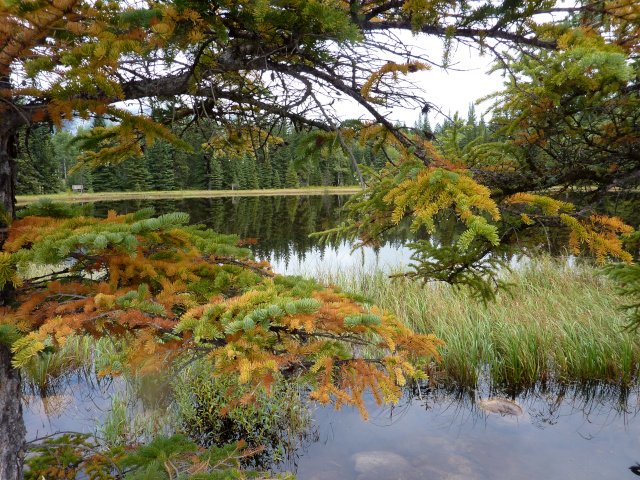
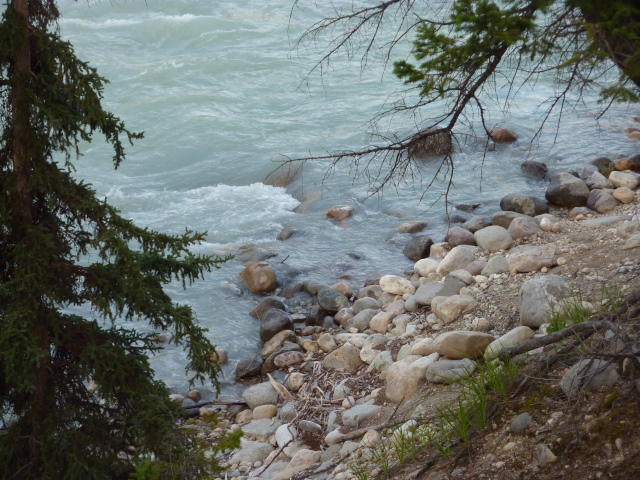
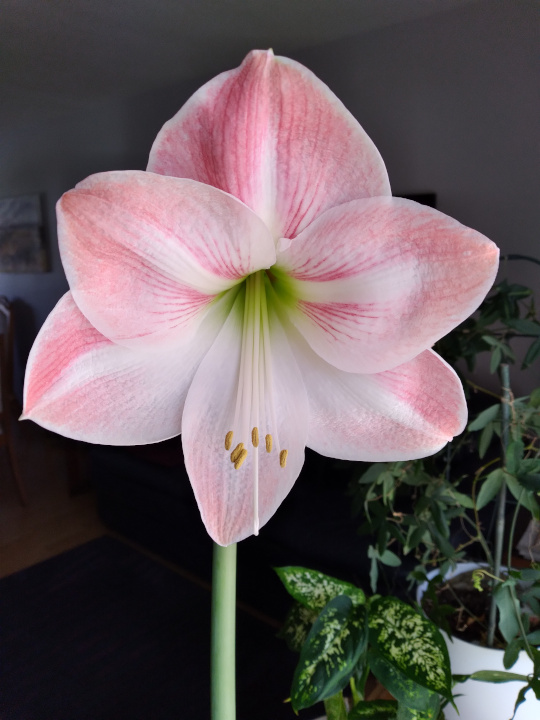
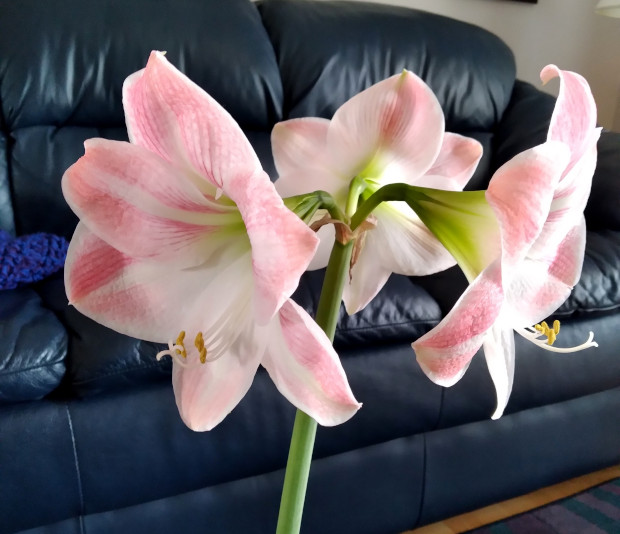
The language of stones is silence. Flowers likewise keep their own counsel. There are exceptions: dried flowers rustle in the wind; live flowers attract choruses of bees happy in their pursuit of nectar. Stones can raise a mighty ruckus if gravity moves them. No one who has watched a rock avalanche in the Rockies (as we have) can forget the almighty roar of stones tumbling down hundreds of feet in search of a level surface on which to take up a new habitation.


These days I’m lonely for both stones and flowers, the landscape where I live being covered in feet of snow—which is also silent, unless hurled forward by wind, in which case it is the wind we hear, not the snow, or unless the temperature is low enough that snow squeaks beneath our boots.
Public discourse, by definition never silent (exceptions there also, of course, for sign language and body language), has taken on an edge in the last years that makes me long for hours spent outdoors, in silence, never mind the weather (and as I write, the wind chill on the other side of the window is – 47 C). So much could be said about how the public square functions these days. To be briefly facetious here, it’s not really a public square anymore at all but private glowing rectangles on which the shouting happens. I am not qualified—as if that matters much these days—to weigh in on momentous policy decisions; I will leave that to those with a higher pay grade and preferably some expertise.
All I want to draw attention to is one seemingly insignificant, yet dismayingly common, tactic of signifying disapproval of an opponent: the twisting of names. That phrasing is actually too kind a label for the practice of using names as weapons. The intent is not actually to signify disapproval but to humiliate and destroy. What is actually signalled is the self-claimed superiority of the one who renames.
Nicknames, we used to call those miserable refusals to use a child’s given name. Who has not heard the horrible epithets created by playground bullies? Fatso, Lard Guts, Skinny, Rat Face, Four Eyes, Stinky. The insults are legion, almost always focused on what the hapless victim cannot change – race, appearance, disabilities. Memories of verbal bullying are hard to erase, as I can testify.
Nicknames can also be affectionate, within families, among close friends, between lovers. Pet names we call those tender labels. Which seems revealing on its own. There’s just a hint of ownership implied by “pet.” The act of naming is an act of power, a dynamic that becomes evident when the wearer of the nickname chooses to resist it. For a child who is growing up and wishes to leave the “pet name” behind, the continued usage of the name begins to feel like an insult. The line between affection and aggression can be thin.
Human beings seem always to have known that naming is somewhat akin to magic. The Book of Genesis includes as part of the creation accounts the story of Adam naming all the animals, having been asked by God to do so. It seems a clear indication of greater intelligence in humans and thus also the responsibility of caretaking, a relationship that can be abused. Parents name their children, sensing at some level that they are conferring on this new little human an individuality, a personhood. That is most often a gracious naming, which in some cultures is also a powerful recognition of ancestors, a continuation of family traditions, even an accolade for some valuable characteristic.
Colonialism was less gracious: over and over again, conquerors have renamed landscape features in an act of appropriation, declaring their ownership. Sometimes the original people, now without power, have also been renamed, sometimes to spare the conquerors the trouble of learning names in an unfamiliar language, sometimes as a deliberate effort to obliterate old traditions and familial ties. Brian Friel, an Irish playwright, in Translations, depicts the English practice of renaming and mapping Irish land as an act of dominance. One of the characters eventually asks the obvious question: if all the place names are changed into another language, will the villagers still know where they are? Indeed, will they know who they are? Names matter.
Given that long human history of naming as a weapon of power, we should probably not be surprised that the current political scene has been corrupted by childish nicknames. Whatever one may say about President Donald Trump (and I have little desire to begin a larger conversation), he has had frightening success in demeaning opponents through his bullying tactic of creating mean nicknames. I will spare my readers the pain of having to read a long list of such nicknames. If you follow the news at all, you will already know them. None of those names should live on, whether they were hurled at worthy men and women or at former “friends” of Trump’s as complicit in criminality as he is. I am particularly troubled by the seeming increase of a similar use of demeaning names in Canadian political conversations.
From hereon, my voting decisions will be strongly influenced by political candidates’ use of names, and slogans, as a weapon. Never having held membership in any political party, I have made my choices primarily on the basis of individual candidates’ qualifications for office, with some consideration given to their party leaders. The character of the individual who will represent me in parliament matters as much as the policies advocated. If someone is willing to use demeaning labels against an opponent, I will interpret that as a serious character blemish, a disqualifying one. That is a failure to show respect to another human being.
It is not a coincidence that the world’s main religions all call for respect to all human beings, and include some version of the Golden Rule, which asks us simply to offer all others the same dignity that we would wish to receive ourselves. One measure of that equalizing respect is to call each individual by his/her chosen name, or earned title. While such a courtesy would not, all by itself, undo extreme and unkind partisanship, it would be a step toward greater civility and hopefully also a movement toward more reasoned discussion of policy rather than a competition of personal attacks against opponents.
I return to the stones and flowers that enrich my world. Their silence and their beauty soothe my spirit.
Could we perhaps improve the governance of our various countries by making it an inflexible rule that all would-be leaders spend 4 weeks in some lonely, isolated place outdoors?

A desert would do, so would a backwoods spot in the mountains, even a northern forested island. No aides allowed, no party officials, no team of caterers, no cell phones or laptops, no more than one book, preferably a blank journal, no trappings of power. Just one Indigenous elder who knows the land well whose periodic visits would make sure that actual starvation or major illness didn’t occur. At the very least, such a measure would open up space for undisturbed contemplation of the responsibilities of the desired governmental position and would remind our would-be dictators that they are, in the larger scheme of things, actually quite small and dependent.


Prolonged silence and solitude has a way of leading us inward. There is no name for that.



 Stones and Flowers