
On any continuum of fury, annoyance sits near the gentler end. Annoyance is our response to some slight loss of control or disappointed expectation: the two hours assigned to an important task were wasted because of missing parts and a malfunctioning tool; a craft project meant to delight a small child disintegrated into tangled threads; a short errand became an ordeal thanks to elusive parking spots and a badly signed detour. We can all add our own examples. I daresay a thousand gizmos and a million advertisements have offered to hold back the tsunamis of annoyance in our lives.
Odd that I so readily connect annoyance to things rather than people. Really, it’s other people who disappoint and frustrate us more and oftener than poorly designed things. Yet my tolerance for people who annoy me is considerably greater than for things that annoy me. Nothing flares my temper quite like the vacuum cleaner that will not suck, or the pill bottle that refuses to be opened.
Lately, that un-openable bottle has come to stand for what will turn into an obsession if I do not contain it sensibly. Contain – the word sums up the problem.
It’s an ancient one: humanoids have always fashioned containers for carrying and storing food, tools, treasures. There is no doing without containers. The more we have and make, the more we need containers. From hollow stones and woven baskets to carved bowls and on toward metal chests with ropes, we have contained our way to our current avalanche of plastics and paper, unfortunately made worse by the pandemic’s take-out meals and online shopping.
But it is not environmental considerations that I want to think about right now, even though those considerations should move us way past annoyance all the way to rage over our garbage-strewn planet.
No, what troubles me is my own garbage-strewn mind, for I keep letting small vexations prompt unreasonable anger.
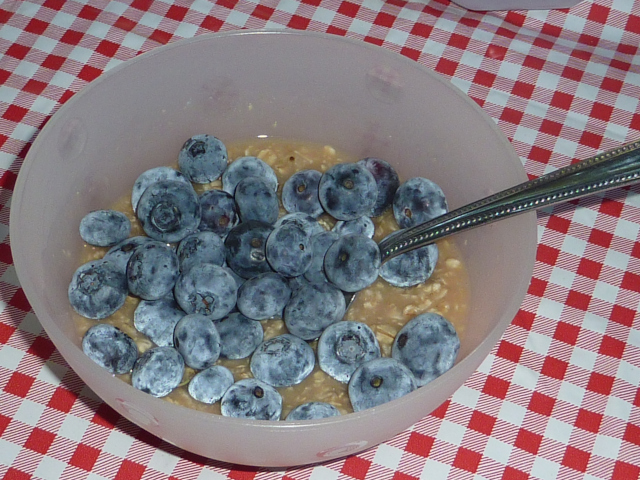
Take blueberries, for instance. I love them. Their mating with yogurt and granola (or oatmeal) for breakfast is made in heaven. But blueberries will not grow in my garden. Believe me, I’ve tried. And wild blueberries don’t appear in the environs of Saskatoon, either. Hence my need to buy – which means containers. Once upon a time, frozen blueberries could be purchased in lightweight plastic bags, simply sealed. All it took was a scissors to snip off the top ¼ inch and some device to tie the bag thereafter. No problem.

Then someone, intent on claiming as much shelf space as possible, invented stand-up bags. Sturdy bastards they are, as they were meant to be. Now my arthritic hands are supposed to tear off the top strip, then somehow grasp the minimally remaining edge to force open the zipper—yes, these “bags” come with their own zipper requiring more manufacturing. Having achieved my breakfast, I am expected to re-zip the stiff bag so that it stays shut and doesn’t spill the rest of the berries on the way back to the freezer compartment where it claims space beyond reason.
Similar bags now contain flour, rolled oats, and all manner of staple goods. I frequently imagine a vengeful kind of afterlife in which the designers and makers of those damned stand-up bags are forced to measure—accurately!—flour and starch and rice for an eternity. It’s awkward to pour anything from those bags and even more difficult to scoop out from without spilling.
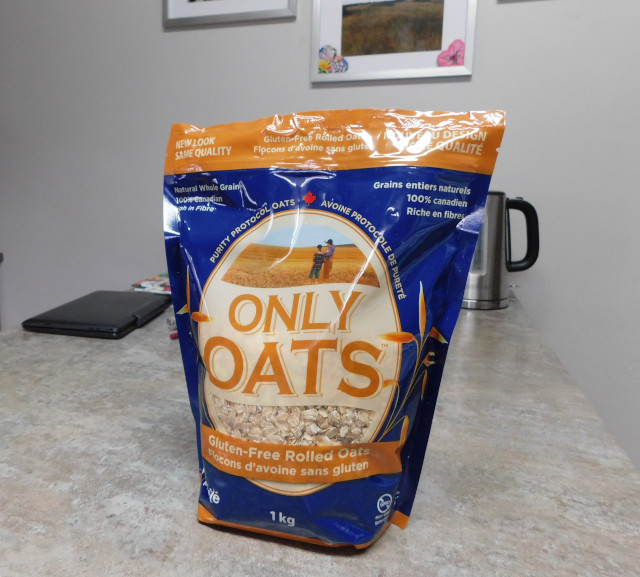

I now avoid frustration by cutting the bags open below the zipper; I can then cleanly transfer the contents to a glass canister or some other stable, non-disposable container. Frozen berries are put into small Ziploc freezer bags which are plastic and do have their own zippers, but at least they’re reusable multiple times over, and their zippers are easier to manage.
Am I becoming a crusty senior citizen, whose tolerance for small physical demands is decreasing? Perhaps.
Another shift in grocery packaging likewise stoked annoyance. Decades ago, we discovered a small bulk food store that sold a wide selection of basic baking and cooking ingredients for reasonable prices. The local owners bought goods in bulk and sold them in small or medium bags that were completely see-through, entirely flexible, and durable. We bought all manner of nuts and flours and pastas and spices there. The bags were tied with tiny strips of sticky paper that were easy to undo; thereafter I re-closed them with whatever baggie ties we already had. It was simple. The bags were small enough and flexible enough that they claimed no more space in the cupboard or freezer than was their due. I have washed and reused the bags for decades; they’re almost everlasting.

Then the beloved bulk food store changed its packaging to brittle, cheap, mostly unrecyclable rigid containers. They sat nicely on the shelves, yes, and I could see the contents, but they were beastly to open and worse to reclose and claimed the same greedy space whether they were full and almost empty. We have not been back to the store again.
It did not improve my mood to see grocery stores shut down their bulk food sections when the pandemic began and likewise stock their shelves with those miserable square plastic abominations. I still vividly recall the day that I failed to resnap the lid of a newly opened container of sunflower seeds, precisely as required; I spilled the entire contents into the fridge and onto the floor.
The unfortunate conjunction of changes in packaging and loss of dexterity due to arthritis has turned me into a curmudgeon. Call it a refusal to acknowledge the aging process, if you must. Or a failure to manage frustration, which could be blamed on COVID loneliness. I’m less inclined to fret about the sources of my irritation than about a way out of the downward spiral.
These words are being written in Lent, the season of conscious awareness of life and death that precedes Easter, the most important holiday for Christians.
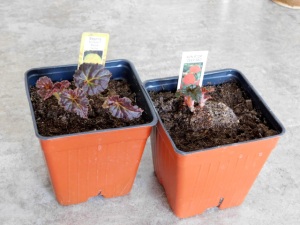
I have been watching in wonder as my seemingly dry, lifeless begonia tubers are now eagerly responding to warmth and light with the first intricate leaves. They will yet produce flower buds which will open into the brilliant colors begonias are known for. Those dry tubers contained life and the promise of beauty.
As so many symbols of Easter do. The shell of the egg, whether painted or no, contains (or did contain) that which nourishes life. Indeed, if I wish to return to the realm of the inorganic, I think of decorative boxes containing chocolates which sometimes contain delectable fillings, pretty baskets containing eggs that contain desired somethings. The most powerful symbol of all, the empty tomb, speaks to the transformation of death into new life. Life cannot be contained; it will burst forth, it will begin anew.
I have moved from the ridiculous (ridiculously trivial, that is) to the sublime. Can I contain both in one posting? Why not? If I can remember to focus on the “contained” rather than the containers, and then, whenever possible, choose that which offers life rather than more inanimate garbage, annoyances should lose some of their power to annoy. I could also choose to advocate for better containers, but that is another project.
 Stones and Flowers